

Ant Control
Treatment for kitchen ants and other common ants around foundations, windows, and landscaping.
View Ant Control →Carpenter ants excavate wood to create nesting galleries rather than eating it. If you repeatedly find large ants indoors, piles of fine wood shavings, or winged ants emerging from walls or wooden structures, investigate the source. Acting early gives you the best chance to locate the nest before the colony expands.
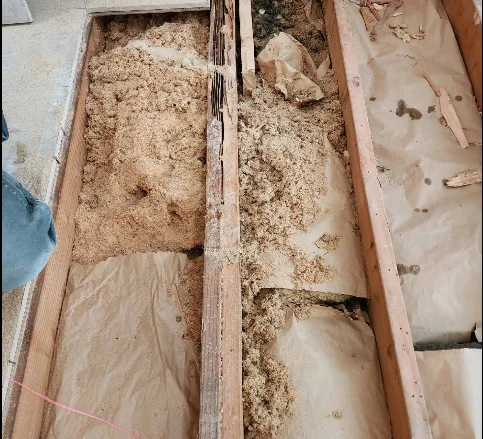
Fine wood shavings mixed with insect debris beneath wooden structures or near small openings.
Carpenter ants often forage after dark. Repeated evening sightings can help reveal their travel routes.
Reproductive ants emerging inside a building can indicate a mature colony nesting within the structure.
Ants following the same route along walls, window frames, or wooden surfaces can reveal where they travel.
Worker carpenter ants commonly measure ¼ to ½ inch long. Queens and winged reproductive ants can be larger. Damp or damaged wood does not confirm an infestation, but it can provide favorable nesting conditions.
Carpenter ants and termites can look similar, especially when winged. Carpenter ants have elbowed antennae, a narrow waist, an evenly rounded upper thorax, and front wings longer than their hind wings. Termites have straight antennae, a broad waist, and four wings of approximately equal length.
Why identification matters: Correct identification matters because these pests require different control approaches. If you cannot identify the insect confidently, a professional inspection can help determine which pest is present.
Properties with mature trees, tree stumps, firewood, decks, and other wooden structures can support carpenter ant nests. Inside homes, nests can form in wood affected by leaks, condensation, or decay.
Finding ants indoors does not automatically mean the nest is inside the house. Carpenter ants may enter from an outdoor colony while foraging for food, or they may be nesting within the structure. Repeated indoor sightings, fresh frass, or winged ants emerging from wood warrant closer investigation.
Because carpenter ants nest out of sight, spraying the ants you see may not eliminate the colony. North Idaho Pest Control can inspect the affected areas, assess the evidence, and explain the findings.
Dead trees, stumps, and firewood piles are common parent nest sites. Moving wood away from the house makes it harder for ants to reach the building.
Leaks around roofs, windows, plumbing, siding, and decks soak the wood. Wet wood is the biggest draw for carpenter ants, and the leak causes damage on its own.
Ants nest in decks, porches, sheds, and fences, then work their way to the house. Where they are on the outside often shows us how they get in.
Decks, docks, wood siding, and landscaping near the water stay damp. If you keep seeing large ants, these are the first places we check.
Older homes often have aging wood, small gaps, and old leaks. Soft wood is easy for ants to dig into, providing easy access to structural framing.
Tell us where you have seen carpenter ants, when they appear, and whether you have noticed wood shavings or moisture damage. These details help focus the inspection.
We examine reported areas for frass, ant trails, entry points, and accessible wood that may contain a nest. We use these findings to assess the likely nesting location and extent of activity.
We determine the treatment approach based on the location and extent of the infestation. Our goal is to address the source of the activity rather than simply the ants you can see.
We treat the identified nesting areas and relevant trails or entry points using the selected method. Before treatment, we explain the planned work and any recommended follow-up.
We explain what the inspection revealed, what treatment was completed, and whether follow-up is recommended. If we identify leaks or deteriorating wood, we explain how fixing those problems can make your home less attractive to carpenter ants.
Visible ants are only part of the picture. Frass, repeated trails, and the location of sightings help build a clearer understanding of the infestation.
You deserve to understand what is happening in your home. We explain our findings, the proposed treatment, and any recommended follow-up so you can make an informed decision.
North Idaho Pest Control serves Coeur d’Alene and nearby North Idaho communities. Contact us to discuss carpenter ant activity at your property and confirm service availability.
Professional carpenter ant control in Coeur d'Alene typically ranges from $275 to $550 for standard residential colony elimination and perimeter defense, with extensive structural or multi-colony treatments ranging from $600 to $1,200. The exact price depends on property square footage, nesting locations, and moisture damage conditions.
A house, apartment, rental, garage, and commercial building each have a different area to inspect and treat.
A few ants in one spot is a smaller job than trails in several rooms or nests in more than one outdoor spot.
A nest in an easy-to-reach piece of wood is simpler than one in a wall void, a deck, a tree, or a stump.
Leaks, damp wood, and damaged framing can change the plan. If wood needs repair, we point it out so you can have a contractor fix it.
We inspect first, so you know what’s needed before work begins.
You get a written estimate before we start.
We serve Coeur d'Alene, ZIP codes 83814 and 83815, along with surrounding North Idaho communities:
Keeping wood dry and reducing accessible nesting sites are essential first steps to make your property less attractive to carpenter ants.
Repair plumbing leaks and address water intrusion around windows, roofs, and exterior walls.
Replace or repair decaying wood that can provide suitable nesting conditions.
Keep it off the ground where practical and away from exterior walls.
Trim branches that touch the house because they can provide ants with a route to the roofline.
Check openings around pipes, utility lines, windows, and doors.
Look around stumps, trees, and wooden structures for fresh frass or repeated ant trails.
These steps can reduce conditions that attract carpenter ants, but they will not eliminate a colony already nesting inside a building.
Check locations where carpenter ants appeared previously and look for fresh frass as outdoor activity increases with warmer weather.
Watch for repeated nighttime trails around wooden structures. Consistent activity along the same route can help reveal where ants are entering or traveling.
Remove fallen branches, store firewood away from the house, and repair leaks or damaged wood before colder weather.
Outdoor activity generally slows in colder conditions, but colonies inside heated buildings can remain active. Do not assume the problem has ended if large ants continue appearing indoors.
Direct, practical answers about carpenter ant control in Coeur d’Alene.
Ask a Specialist: (208) 248-2701Yes. We provide targeted carpenter ant inspection and extermination services for single-family residences, rental properties, log cabins, shops, and commercial facilities throughout Coeur d’Alene and North Idaho. Our licensed technicians locate both indoor satellite nests and outdoor parent colonies in damp structural wood to eliminate the problem at the source.
Professional carpenter ant control in Coeur d'Alene typically ranges from $275 to $550 for standard residential colony elimination and exterior/interior perimeter treatments. Extensive structural infestations requiring wall-void drilling or crawl space remediation range between $600 and $1,200. Pricing depends on square footage, the number and accessibility of active nesting sites, and outdoor parent colonies. We provide a transparent, upfront written quote before performing any work.
Yes. We exclusively use EPA-registered products applied strictly by the manufacturer label instructions. Our treatments focus on targeted wall-void injections, localized baits, and perimeter barrier protections kept well out of reach of children and household pets. Once liquid applications have dried (typically within 1 to 2 hours), treated areas are safe for normal activity.
We prioritize rapid response times across Coeur d'Alene, Hayden, Rathdrum, and Post Falls, frequently offering same-day or next-business-day inspection slots. Call us directly at (208) 248-2701 to schedule an immediate property inspection.
Yes, our carpenter ant treatments are backed by a workmanship guarantee. Because carpenter ant colonies transfer slow-acting treatments back to the queen over a couple of weeks, full colony collapse takes time. If carpenter ant activity persists or returns within your guaranteed warranty period, we will promptly re-inspect and re-treat the affected areas at no extra cost.
Other pest problems can occur alongside carpenter ant activity
Treatment for kitchen ants and other common ants around foundations, windows, and landscaping.
View Ant Control →Treatment for spiders around windows, eaves, garages, sheds, and outdoor areas.
View Spider Control →Inspection and control for mice and rats entering through gaps, crawl spaces, and garages.
View Rodent Control →Treatment for fleas in carpets, pet areas, furniture, and other indoor spaces.
View Flea Control →Tell us where you found the ants, what they look like, whether you have noticed sawdust-like material, and how long the activity has been present. We can inspect the affected areas, identify the pest, look for possible nesting conditions, and explain suitable treatment options.
Direct Phone
(208) 248-2701Service Headquarters
Coeur d'Alene, Idaho
Business Hours
Monday to Friday: 7 AM to 7 PM
Saturday: 8 AM to 4 PM